La Galigo, also called Sureq Galigo, is a Bugis epic cycle from South Sulawesi, transmitted through manuscripts and practices of reading aloud. Its stories concern a mythological world of divine descent, kinship, journeys, and human origins. The name refers to a large literary tradition, not one complete surviving book. Understanding it requires attention to both the written page and the people who give that page a voice.
For museum visitors, three distinctions are especially useful: the epic is different from any individual copy; the age of a narrative is different from the date of a manuscript; and a traditional reading is different from a modern stage adaptation. Keeping those distinctions visible makes the history more precise without diminishing the work's cultural importance.
A Bugis Epic and Its Narrative World
Indonesia's national Memory of the World committee describes the cycle through Batara Guru's descent to the middle world in Luwu and the lives of his descendants, particularly Sawerigading and his son La Galigo. These are figures within the epic's cosmology. Their journeys and relationships should be introduced as narrative traditions, rather than as a verified chronology of named historical rulers. ANRI: La Galigo.
That distinction is useful when reading an exhibition label. A story can preserve ways of imagining ancestry, authority, or relationships between human and divine worlds without functioning as a court chronicle. A reader should therefore ask what kind of text is being presented before asking whether every event happened. Literary meaning, religious significance, and historical evidence are related questions, but they require different methods of interpretation.
Why There Is More Than One La Galigo Manuscript
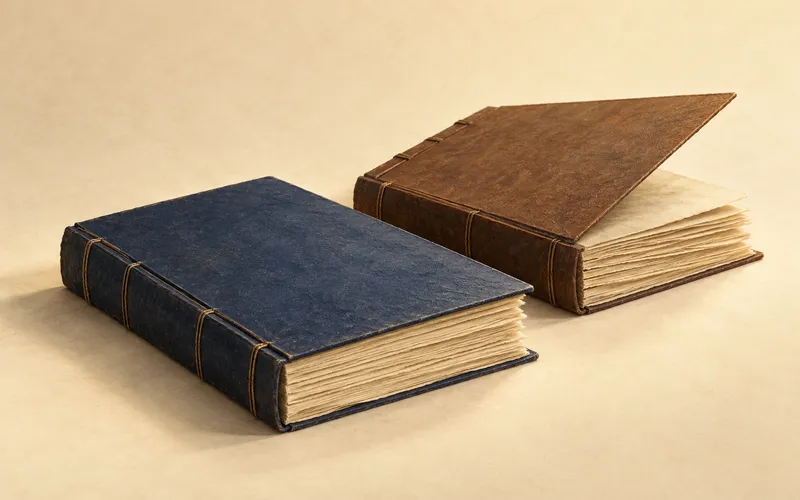
A manuscript is a particular physical witness to a text. The national committee explains that surviving La Galigo witnesses contain portions of the cycle, from substantial episodes to smaller fragments, and are dispersed among private and public collections. Its account identifies holdings in South Sulawesi and abroad. No single copy should be used as shorthand for the whole tradition. ANRI: manuscript distribution.
This changes how an object should be described. A catalogue needs an identifiable collection reference and an account of the portion preserved, not simply the label “the La Galigo manuscript.” Missing passages, the boundaries of an episode, and differences between copies can all matter to a researcher. Readers exploring the museum's Manuscripts and Literature collection can use this distinction between a work and its individual witnesses when approaching other manuscript traditions too.
Colliq Pujie and the Leiden Manuscript
The Leiden witness, NBG-Boeg 188, comprises twelve parts. Leiden's institutional account places its transcription in Makassar around 1852–1858 under the direction of Colliq Pujie, also known as Arung Pancana Toa, associated with Tanete. It preserves a substantial opening portion of the epic. These details locate a specific copying project; they do not make Colliq Pujie the sole originator of the entire narrative tradition. KITLV / Leiden University.
Naming her helps an exhibition move beyond a story told only through the institution that now holds a manuscript. Intellectual and literary work includes arranging, selecting, transmitting, and supporting the preservation of material, as well as composing something new. For a particular manuscript, the roles of patron, organizer, scribe, collector, and later editor should be distinguished wherever the evidence permits. A shelf mark identifies an object; it does not replace the people involved in its history.
Language, Metre, and the Problem of Dating
UNESCO characterizes La Galigo as metrical poetry with a distinctive Bugis vocabulary. Its register entry gives an approximate fourteenth-century date for the tradition and describes its oral roots and pre-Islamic mythological content. That broad dating must not be transferred to the nineteenth-century Leiden copy. Similarly, UNESCO's estimate of roughly 6,000 folio pages concerns the scale of the wider work, not the dimensions of one bound volume. UNESCO: La Galigo.
A museum should make these different kinds of information easy to separate. Language describes the verbal medium; script concerns its written representation; metre concerns poetic organization; and a copying date belongs to an individual witness. A translation can explain a passage's sense without reproducing every feature of its sound. The broader article on precolonial writing systems provides a useful setting for these distinctions, while leaving La Galigo's particular literary language in view.
Massureq: Written Text Given a Voice
Massureq is sung reading of a text. Andi Sulkarnaen's study of maddoja bine, an overnight rice-seed vigil, documents readings of Sureq La Galigo within that practice. The study also records variations, including observances without such readings. Its findings describe situated practices and changes; they do not establish that every Bugis household performs the same rite. Sulkarnaen, Masyarakat Indonesia.
For an exhibition, this offers a reason to place manuscript interpretation beside carefully documented sound. A recording should identify the reader, place, occasion, and passage where that information is available. The visible text and its delivery are different kinds of evidence: a photograph cannot convey pacing, and a recording alone may not reveal how a reader follows the page. Cultural memory becomes more intelligible when these materials are presented together with the participants' explanations.
Modern Theatre as an Adaptation
Robert Wilson's production archive dates the premiere of I La Galigo to 12 March 2004 at Singapore's Esplanade and identifies music by Rahayu Supanggah. This is a documented modern production inspired by the epic. It should not be presented as a complete staging of every manuscript episode or as an unchanged traditional ceremony. Robert Wilson: production archive.
The Ravenna Festival's production record also credits Rhoda Grauer for dramaturgy and textual adaptation and Restu I Kusumaningrum for artistic coordination. Acknowledging those roles makes the process of adaptation visible. Choices about movement, music, duration, and narrative selection create a new theatrical work. An exhibition can compare such choices with manuscript and reading traditions without treating one medium as the measure of all the others. Ravenna Festival: production credits.
Recognition, Digital Access, and Cultural Memory
La Galigo entered UNESCO's Memory of the World Register in 2011 through an Indonesian–Dutch nomination. This is recognition of documentary heritage, not a declaration that every episode is historical fact. Leiden's account reports the digitization of its manuscript in 2017, opening another route to study beyond the reading room. UNESCO register; Leiden digitization account.
Digital access is most useful when an image remains connected to its catalogue information. A page can be enlarged or compared, but the screen alone does not supply pronunciation, provenance, or the circumstances of a performance. Preservation therefore involves several complementary tasks: caring for originals, maintaining reliable descriptions, enabling reading, and recognizing the knowledge of people who work with the tradition. The museum's overview of sacred texts and manuscripts places this relationship between objects and interpretation in a wider Indonesian context.
Conclusion
La Galigo matters as a literary world sustained through different acts of transmission. Manuscript copies, sung readings, scholarly descriptions, and theatre productions preserve or reinterpret different aspects of that world. A careful museum account names the particular witness or practice it discusses and makes the limits of its evidence clear.
The most productive encounter begins with a modest question: which manuscript, passage, reader, or performance are we looking at? From that starting point, the epic's scale becomes approachable, and cultural memory emerges through identifiable people and practices rather than through a single monumental label.