Minangkabau Architecture and the Meaning Behind Rumah Gadang
The Minangkabau people of West Sumatra, Indonesia, are renowned for their unique architectural style, particularly the traditional houses known as Rumah Gadang. These houses are not only a testament to the Minangkabau's architectural ingenuity but also a reflection of their matrilineal culture and social structure.
Architectural Features
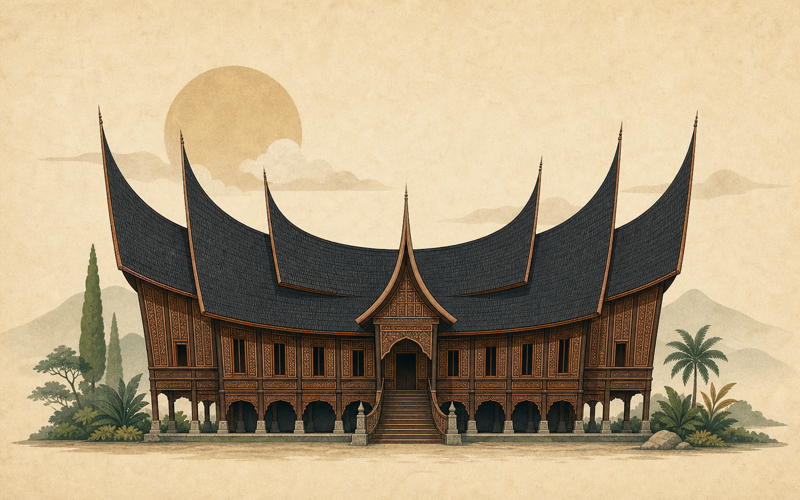
Rumah Gadang, which translates to "big house," is characterized by its distinctive curved roof, which resembles the horns of a buffalo. This design is not merely aesthetic; it holds deep cultural significance. The buffalo is a revered animal in Minangkabau culture, symbolizing strength and resilience. The roof's upward curves are said to represent the Minangkabau's historical victory over the Javanese, achieved through a buffalo fight.
The structure of a Rumah Gadang is typically built on stilts, a common feature in Southeast Asian architecture, which provides protection against flooding and pests. The house is constructed using local materials such as wood and bamboo, with intricate carvings adorning the walls and pillars, each telling stories of the family's ancestry and cultural heritage.
Cultural Significance
In Minangkabau society, the Rumah Gadang serves as more than just a dwelling. It is a symbol of family unity and cultural identity. The house is owned by the women of the family, reflecting the matrilineal system where property and lineage are passed down through the female line. This system empowers women and plays a crucial role in maintaining social harmony within the community.
The Rumah Gadang is also a center for social and ceremonial activities. It hosts family gatherings, traditional ceremonies, and serves as a place for resolving disputes. The house's design facilitates these functions, with large open spaces that can accommodate many people.
Preservation and Modern Challenges
Today, the preservation of Rumah Gadang faces challenges due to modernization and economic pressures. Many traditional houses have been replaced by modern structures, leading to a loss of cultural heritage. However, efforts are being made to preserve this architectural style through cultural tourism and government initiatives.
In conclusion, the Rumah Gadang is a vital part of Minangkabau culture, embodying the community's values, history, and social structure. Its preservation is essential for maintaining the cultural identity of the Minangkabau people and for future generations to appreciate this unique architectural heritage.