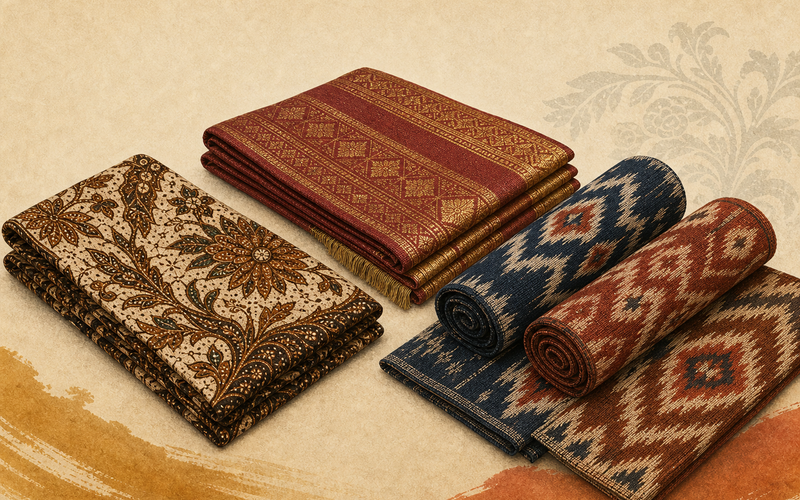
Indonesia's textiles include several different ways of constructing and patterning cloth. Ikat uses resist-dyed yarns, songket adds decorative supplementary threads, and regional cloth traditions such as ulos also carry names and uses shaped by social relationships. This overview introduces those distinctions before following individual traditions in depth.
Ikat Weaving
Ikat patterns are prepared by binding selected sections of yarn to resist dye before weaving. Depending on the technique, the patterned threads run lengthwise as warp, crosswise as weft, or in both directions. Indonesian heritage documentation distinguishes these methods. A cloth's technique can be described from its structure; the meaning of a motif requires evidence from the community and occasion concerned. Direktorat Warisan dan Diplomasi Budaya.
Songket Weaving
Songket uses supplementary decorative threads, often with a gold or silver appearance, against a woven ground. In Palembang, heritage documentation connects its use with courtly rank and ceremonial dress. That regional history does not establish one meaning for every songket motif across Indonesia. The Sumatran songket article explores the relationship between weaving, adornment, and social standing. Palembang heritage account.
Ulos Textiles
Ulos belongs to Batak textile traditions in North Sumatra. Research on mangulosi in Pangururan, Samosir, examines the giving of ulos within Batak Toba life-cycle ceremonies. The relationship between giver and recipient helps explain the cloth's role. Describing that documented setting is more useful than assigning a universal meaning to every Batak textile or treating all Batak communities as identical. Universitas Negeri Medan: study of mangulosi.
Endek and Gringsing
Balinese endek uses weft ikat, while gringsing from Tenganan Pegringsingan uses double ikat: both warp and weft are patterned before weaving. This technical distinction explains why aligning the threads is central to gringsing production. Indonesian cultural documentation: endek.
The Australian Museum describes beliefs about gringsing's protective power and ceremonial use in Tenganan. These are religious interpretations associated with a particular textile tradition, rather than evidence of medical effects or a claim about all Balinese cloth. The specialist article follows the weaving process and its local context in greater depth. Australian Museum: geringsing E097472.
Conclusion
Comparing textiles begins with materials and technique, then moves to makers, wearers, and occasions. Ikat, songket, ulos, endek, and gringsing are useful starting points for that comparison, not interchangeable names for a single national tradition. The Textiles and Craft topic connects this overview with more detailed accounts.