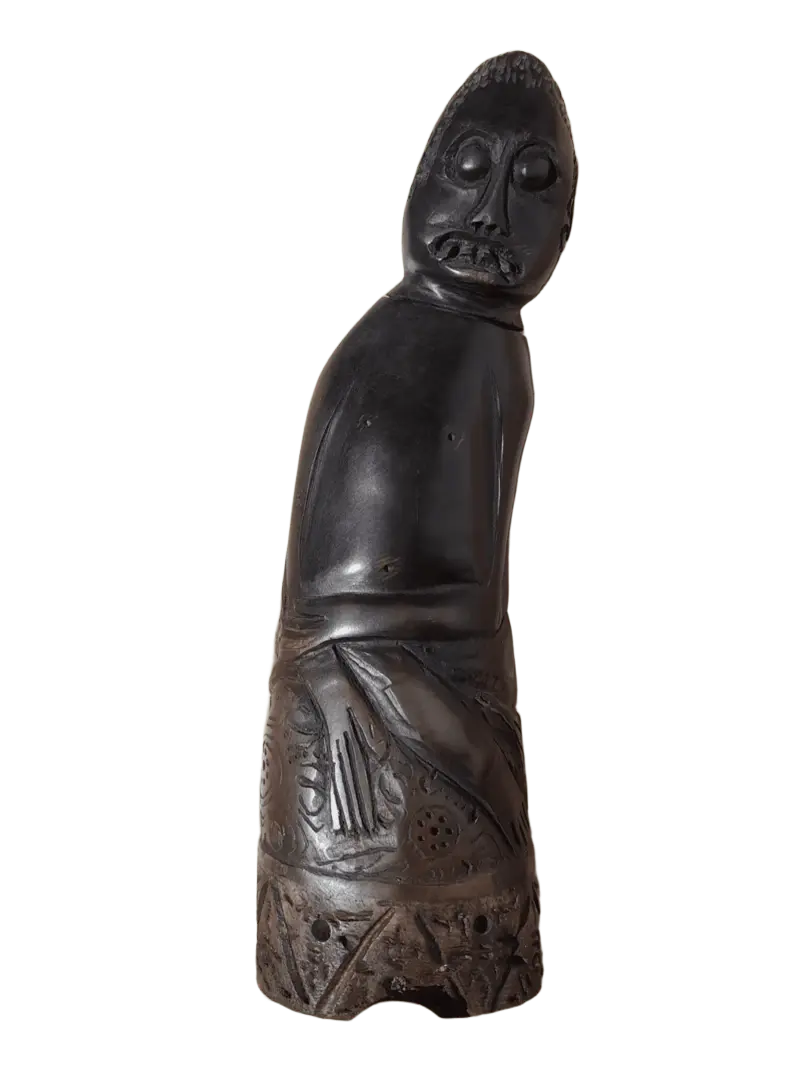
Description of the Objects
The two objects discussed here are carved male and female figures made from buffalo horn and acquired in Lombok. Each figure is hollowed and designed with a detachable head, suggesting a functional rather than purely decorative purpose. Based on form and comparison with known ethnographic examples from Indonesia and other parts of Southeast Asia, these objects were likely used as containers associated with the preparation and consumption of betel quid, specifically for holding lime.
The figures are sculpted in anthropomorphic form, with stylized bodies and clearly differentiated gender characteristics. The detachable head functions as a lid, concealing a cavity within the body. The use of buffalo horn provides both durability and a distinctive dark surface that can be polished to a smooth sheen. The material itself carries cultural significance in many Indonesian societies, where water buffalo are valued for their agricultural, economic, and ritual importance.
Betel Chewing in Indonesian Context
Betel chewing, the practice of chewing areca nut combined with betel leaf and slaked lime, has a long documented history across Island Southeast Asia. Archaeological and historical evidence indicates that the practice predates European contact and was widespread in Indonesia, including Lombok and neighboring regions such as Bali and Sumbawa. The preparation of betel quid traditionally involves several components: areca nut, betel leaf, lime, and sometimes additional flavorings such as gambier or tobacco.
Containers for these ingredients have historically been made in a wide variety of materials, including metal, wood, bamboo, and horn. Lime containers in particular are often crafted with care, as lime must be kept dry and accessible in small quantities. Anthropomorphic lime containers are documented in various parts of eastern Indonesia, where they sometimes take the form of human figures with removable heads or stoppers.
While precise attribution of these specific Lombok figures to a particular workshop or ethnic group requires further comparative research, their structure aligns with the broader tradition of portable lime containers used in daily and ceremonial contexts.
Material and Craft Tradition
Buffalo horn has been used in Indonesia for tools, ornaments, and ritual objects. Its strength and workability allow for detailed carving, while its natural curvature can influence the final form of an object. In some regions, horn containers were associated with personal grooming kits or betel sets carried by men and women.
The detachable head design suggests a practical solution for sealing the contents. In documented examples from other islands in eastern Indonesia, similar containers feature carved stoppers that align with the body through friction fit. This design minimizes spillage and protects the lime from moisture.
Carved human figures in Indonesian art range from ancestor representations to decorative motifs on everyday objects. However, without clear provenance or field documentation, it would be speculative to assign a specific ritual or symbolic meaning to these two figures. It is therefore more accurate to interpret them primarily within the functional sphere of betel culture, while acknowledging that aesthetic and symbolic dimensions may also have been present.
Lombok and Regional Context
Lombok, located east of Bali, has long been part of regional trade networks connecting Java, Bali, Sumbawa, and further eastern islands. Cultural practices in Lombok reflect both local Sasak traditions and influences from neighboring regions. Betel chewing was historically common across these communities and formed part of social interaction, hospitality, and ceremonial exchange.
In many Indonesian societies, offering betel was a gesture of welcome and respect. The objects used in its preparation could therefore carry social meaning beyond their practical function. Even modest lime containers might reflect personal identity, craftsmanship, and regional style.
Conclusion
The pair of carved buffalo horn male and female figures from Lombok likely served as lime containers within the broader tradition of betel chewing. Their anthropomorphic form and detachable heads combine practical design with artistic expression. While specific historical details about these exact pieces remain uncertain without further research, they can be understood within a well documented Southeast Asian material culture associated with betel preparation, hospitality, and daily life.
As objects in a private collection, they represent a tangible link to longstanding practices in Indonesian society and illustrate how utilitarian items were often shaped with aesthetic care and cultural meaning.
Note: The objects illustrated in this article are part of the author's private collection.