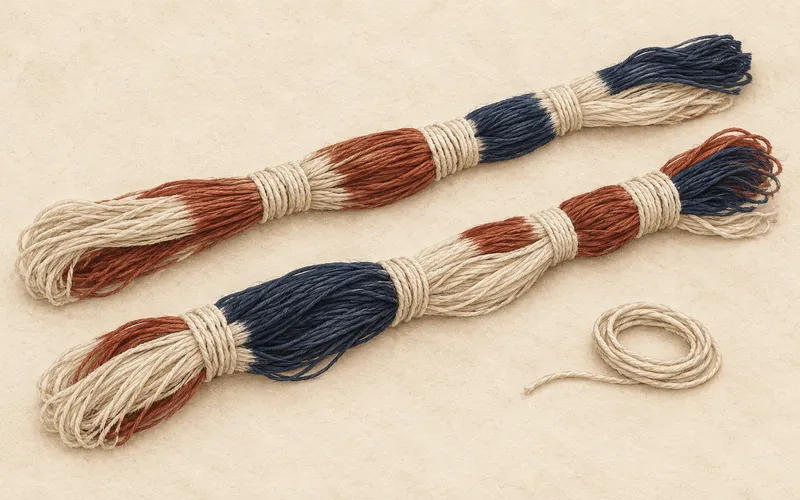
Gringsing, also spelled geringsing, is a double-ikat textile associated with Tenganan Pegringsingan in Karangasem, eastern Bali. Its pattern develops from two sets of threads dyed before weaving: the lengthwise warp and the crosswise weft. Bringing them into alignment demands careful preparation and attention at the loom. The finished cloth also carries religious significance, including beliefs about protection.
These two aspects belong together, but they require different explanations. Thread preparation describes a material process; protection describes how people understand and use the textile. Looking at both makes gringsing more than an attractive pattern and gives the work of its makers a central place in the story.
Tenganan and a Recognized Weaving Tradition
Indonesia's intangible cultural heritage register records Gringsing Tenganan under traditional skills and craftsmanship, with a 2015 designation. It locates the tradition in Karangasem, Bali. This is a national heritage listing, not a UNESCO inscription, and its date records recognition rather than the beginning of weaving in the village. Indonesian heritage register.
Using the village name matters. “Balinese textile” is a useful broad description, but it cannot identify a particular method, community, or ritual setting. The museum's overview of textiles beyond batik places gringsing among other traditions. Here, the focus stays on the combination of technique and knowledge associated with Tenganan, without treating one community as a model for all Bali.
How Double Ikat Produces a Pattern
Ikat uses bindings to resist dye on selected portions of yarn before it becomes cloth. An Indonesian heritage explanation distinguishes warp ikat, weft ikat, and double ikat according to which thread system receives this treatment. In double ikat, both do. “Double” therefore identifies the patterned thread systems; it does not mean that two completed fabrics are sewn together. Directorate of Cultural Heritage and Diplomacy: ikat techniques.
Imagine a motif distributed across separate lengths of yarn. The intended design must account for how the lengthwise and crosswise threads will meet. Weaving brings those planned colour areas together. This helps explain why a photograph of the surface cannot tell the whole production story: the visible pattern is also the result of decisions made before the cloth existed. Technique should be identified through thread structure and production evidence, rather than by resemblance to a familiar motif alone.
Cotton, Colour, and Preparation
Ayuk Puspitasari's 2015 study at Universitas Negeri Yogyakarta documents gringsing through observation, interviews, and photographs. Its account includes preparing materials and equipment, spinning, binding, and dyeing, and identifies a restrained red, black, and white palette. These findings provide a located study of production rather than a universal recipe for every cloth. Puspitasari's research record.
The Australian Museum describes hand-spun cotton and natural dyes, with tones ranging from pale ecru to deep red and very dark blue or purple. Colour names in different accounts need not describe identical shades. Fibre, dye, and the appearance of a photographed surface are related but separate kinds of information. An exact plant recipe or processing time should be attributed to a documented maker or study, not inferred from colour alone. Australian Museum: E097472.
Protection and the Meaning of Ritual Use
An Indonesian heritage article explains the name through gering, illness, and sing, negation, and describes gringsing as a cloth associated with warding off misfortune. This is a reported cultural explanation of the name and its protective role. It should be presented respectfully as belief, without converting it into a claim that the textile medically prevents illness. BPNB Bali: gringsing and preservation.
Specific uses make that significance more concrete. The Australian Museum describes rantasan offerings in which cloth is normally left uncut, with unwoven warp threads maintaining a continuous loop. In this account, formally cutting the threads has religious meaning. A textile's physical condition can therefore be part of its ritual identity. This is a particular documented use, not an instruction to cut every gringsing or a rule for all cloth owners. Australian Museum: ritual context.
Indra, Oral Tradition, and Historical Evidence
The Australian Museum records a tradition in which Indra gave the women of Tenganan the knowledge of making gringsing. The account explains the sacred value assigned to weaving skills. It belongs in an article about the textile because it concerns how knowledge is understood, but it does not establish a historical date for the invention of double ikat. Australian Museum: Balinese Expressions.
Oral tradition and a dated museum object answer different questions. A story may explain authority or obligation; a collection record may provide evidence that a particular cloth existed by a certain time. Neither should be made to do the other's work. For a broader discussion of how material things participate in religious life, see the museum's article on sacred objects.
Named Designs and Individual Cloths
Luh Wina Sadevi's study, published in 2015, examined changes in gringsing ornament, motifs, and colours between 1990 and 2014. It reported an increase in the number of motifs recorded during that period. This is useful evidence that a tradition can maintain recognizable conventions while its documented repertoire changes; a single motif count should not be treated as a timeless total. Sadevi's study.
An individual museum record offers another scale of attention. The National Gallery of Victoria catalogues a twentieth-century geringsing wayang, accession AS6-1974, made from cotton and dyes using double ikat and measuring 80 by 218 centimetres. Such particulars distinguish a real cloth from the general category. They do not establish the dimensions, date, or ritual history of another example that looks similar. NGV collection record.
Keeping Weaving Knowledge in Use
In 2017, BPNB Bali called for training younger gringsing weavers and attention to the values carried by the tradition amid commercialization. That dated appeal is evidence of a preservation concern at the time, not a current census of makers. It points to a practical question: how can knowledge continue to be used and taught, rather than surviving only in finished textiles? BPNB Bali: younger weavers.
For a museum, this suggests documenting processes and crediting makers wherever information is available. A pattern chart can record arrangement, while a maker's explanation can clarify choices, sequence, and appropriate use. Neither should be mistaken for complete mastery of the craft. The Textiles and Craft collection connects gringsing with other practices whose continuity depends on people as much as objects.
Conclusion
Gringsing brings planned colour, coordinated threads, and religious understanding into a single textile. Its double-ikat structure rewards close looking, while its ritual significance requires attention to the community and occasion.
Preserving this heritage means caring for cloth and sustaining the knowledge through which it is made and interpreted. Keeping material evidence, local explanations, and historical uncertainty distinct helps each part of that heritage remain intelligible.