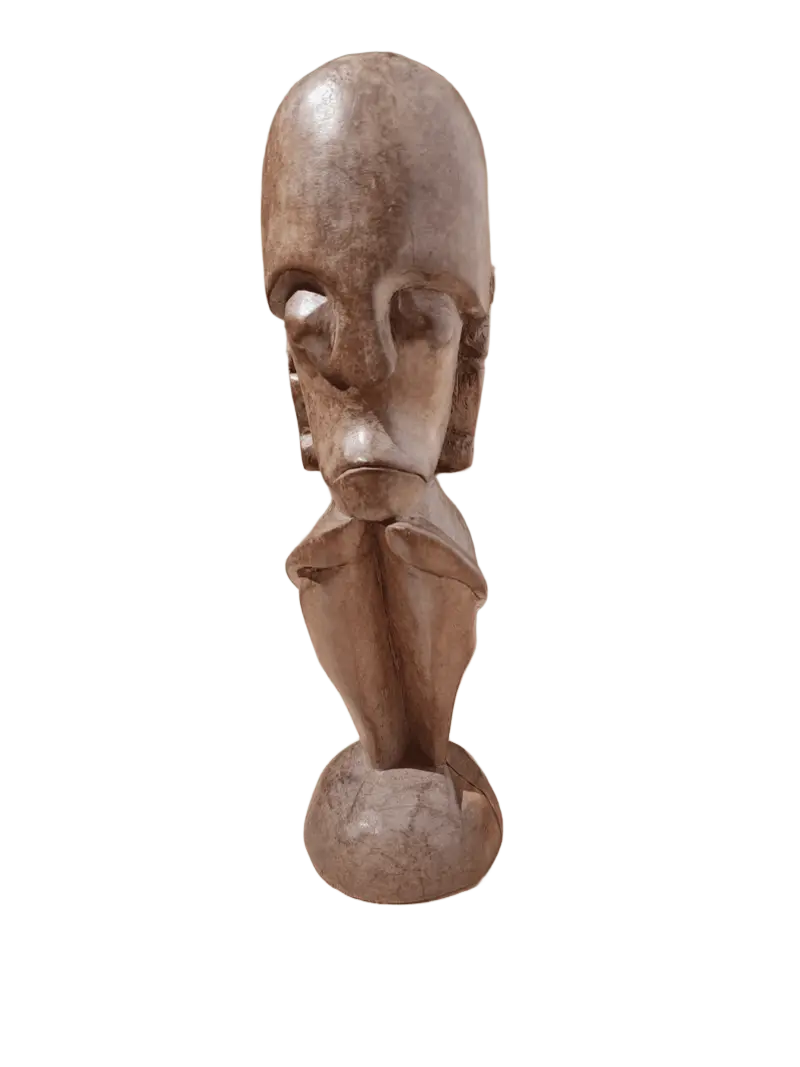
Pangulubalang: A Batak Male Ancestor Carved in White Wood
Among the ritual sculptures of the Batak peoples of North Sumatra, the pangulubalang occupies a distinct and powerful position. Traditionally understood as a protective ancestral figure, the pangulubalang was associated with spiritual defense, communal protection, and the presence of ancestral force within the village landscape. These sculptures were not decorative objects. They embodied authority, lineage memory, and ritual potency.
The statue described here is carved from a single heavy piece of pale hardwood. The male ancestor is seated directly upon the ground, his hands resting firmly on his knees. His posture is upright and symmetrical. The ears are elongated in the characteristic Batak manner, and the face is noticeably elongated, with controlled, stylized features. The carving is elegant yet restrained, emphasizing stability and composure rather than movement.
The Pangulubalang in Batak Society
In Batak cosmology, ancestral power was not abstract. It was active, protective, and potentially dangerous if neglected. The pangulubalang functioned as a guardian figure. Historical accounts describe such statues being placed at strategic points in villages, sometimes near entrances, to guard against hostile forces both human and spiritual.
The term pangulubalang can refer to a protective spirit or guardian presence invoked through ritual means. In certain traditions, ritual specialists prepared substances and infused them into or around the statue to activate its protective qualities. The sculpture itself thus became more than carved wood. It became a locus of spiritual agency.
While many documented pangulubalang figures are shown standing, seated examples are consistent with the broader Southeast Asian language of authority in sculpture. A seated posture with hands placed on the knees conveys contained strength. It suggests readiness and watchfulness rather than passivity.
Posture and Authority
The seated position of this figure deserves attention. The legs are bent, the torso upright, and the hands rest deliberately on the knees. This pose appears across various Indonesian sculptural traditions as a sign of controlled power and dignified presence.
There is no dramatic gesture. The stillness is intentional. In Batak visual language, frontal symmetry communicates balance and spiritual steadiness. The figure does not appear animated or expressive in a naturalistic sense. Instead, it is composed, almost architectural in its solidity.
Such composure reflects Batak concepts of social hierarchy and ancestral authority. Elders and lineage founders were respected as stabilizing forces within the community. A seated ancestor figure expresses this stability in material form.
Elongated Ears and Facial Proportions
The elongated ears carved on this statue are typical of Batak sculptural conventions. Extended earlobes are widely interpreted in many Asian traditions as indicators of wisdom, rank, or spiritual status. Within Batak carving, they also serve to emphasize the head as the seat of power and identity.
The elongated face further reinforces stylization over naturalism. Batak woodcarvers often prioritized symbolic proportion rather than anatomical accuracy. The head, in particular, is frequently enlarged or emphasized, underscoring its spiritual significance.
Facial expression in such figures tends to be restrained. Eyes may be incised or slightly protruding, mouth closed, features simplified. The goal was not portrait likeness but the evocation of ancestral presence.
Material and Technique
The statue is carved from a single block of heavy pale wood. Working from one piece of timber demonstrates technical skill and planning. It ensures structural integrity and symbolic unity. In many Indonesian carving traditions, unity of material was associated with strength.
Pale or white wood may indicate either the natural tone of the timber species or limited exposure to smoke and oils. Many ritual objects darkened over time due to placement within traditional houses, where smoke from hearths accumulated on surfaces. A lighter surface can result from careful preservation, minimal ritual treatment, or specific wood selection.
The weight and density of the wood contribute to the figure’s presence. This is not a lightweight decorative carving. It is substantial, reinforcing the impression of endurance and grounded authority.
Batak Culture and Ancestral Representation
The Batak peoples of North Sumatra historically organized social life around kinship groups and lineage structures. Ancestors played a central role in legitimizing land rights, ritual authority, and social cohesion. Sculptural representation of ancestors was therefore not marginal but embedded in the fabric of communal identity.
In addition to pangulubalang figures, Batak art includes carved house facades, ritual staffs, calendrical devices, and containers associated with ritual specialists. Across these forms, consistent visual themes appear: frontal composition, dynamic curves in ornamental motifs, and the integration of protective symbolism.
The pangulubalang stands within this broader artistic and spiritual tradition. It represents the convergence of craft, belief, and social structure.
An Embodiment of Presence
This seated male ancestor figure carved in white wood embodies more than aesthetic refinement. Its symmetry, elongated ears, and composed posture speak to Batak understandings of protection, lineage, and spiritual continuity. Carved from a single piece of wood, it presents unity and strength. Seated yet vigilant, it conveys authority without motion.
As an object, it reflects the sophistication of Batak woodcarving and the depth of ancestral reverence in North Sumatra. As a presence, it echoes the enduring role of ancestors as guardians and stabilizing forces within Batak cultural memory.
Note: The object illustrated in this article is part of the author's private collection.