Description of the Object
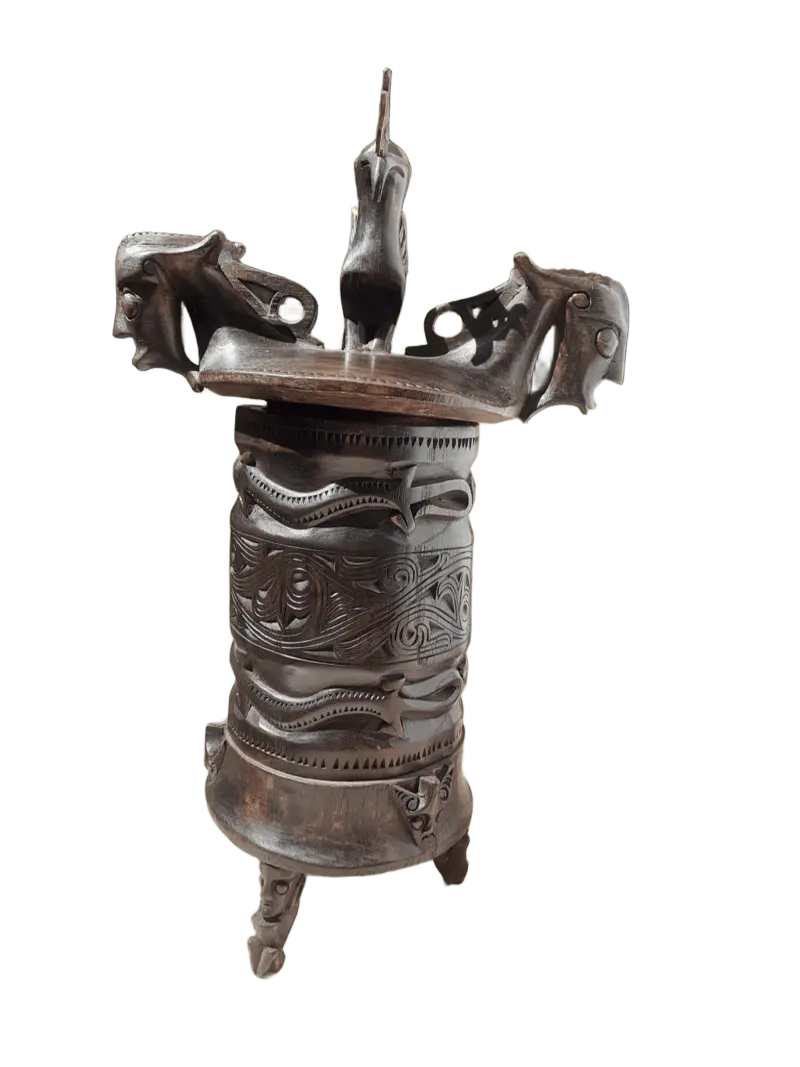
This carved wooden container is likely associated with betel and lime preparation, a practice observed across many Indonesian cultures including among Batak communities of northern Sumatra. The container rests on three carved legs shaped like human figures, a form that elevates the piece visually and practically. Its body is decorated with Batak spirals and heads carved in relief, motifs that reflect locally significant artistic vocabularies. On the lid are two stylized singa heads positioned left and right, with prolonged chins, and between them stands a carved bird figure. The use of a hardwood painted black and the presence of finely executed carving indicate skilled craftsmanship.
Objects similar in function, containers for powdered lime used in betel chewing, have been documented among the Batak people of North Sumatra. Such containers are known as lime containers or, more generally, as part of betel paraphernalia, with variants in bamboo, horn, and wood. At least one related example from the Karo Batak has been documented in which a tall, finely etched bamboo container with wooden mounts was used to hold powdered lime for betel quid preparation. This practice involved burning seashells or coral to obtain lime powder, an essential component mixed with areca nut and betel leaf.
Batak Art and Symbolism
For the Batak peoples, artistic motifs are not merely decorative. The swirling spirals and geometric patterns that adorn the body of this container relate to the broader tradition known as gorga. Gorga refers to carved or painted motifs that appear on Batak architecture and objects and are believed to hold protective or metaphysical significance. Spiral forms in Batak gorga can symbolize continuity, natural cycles, or the protective power inherent in traditional ornamentation.
The heads and figures carved into Batak objects often draw from indigenous cosmology. One important figure is the gecko deity known as Boraspati ni Tano, a representation of the earth deity in Batak mythology. Boraspati ni Tano is frequently depicted as a tokay gecko and appears in a variety of Batak artistic contexts, including decorating the covers of magical books (pustaha) and ritual containers. As the earth deity associated with fertility and underworld forces, Boraspati ni Tano’s presence on an object may signal an invocation of protection or fertility.
The twin heads on the lid of this container are reminiscent of the singa motif from Batak mythology. Contrary to the zoological idea of a lion, the singa in Batak iconography represents a powerful protective being described as part human, part water buffalo, and part reptile. This figure appears frequently in Batak carvings and is understood to embody benevolent power and spiritual protection, making it a common feature on objects intended to safeguard valuable contents or to act as talismans.
The bird figure at the center of the lid may also have symbolic resonance. Birds appear in various Batak carved forms, sometimes associated with ancestral spirits or elements of cosmology that connect the heavens to the earthly plane. While specific attribution of this bird to a named Batak mythological being is not documented without further provenance, its placement alongside protective motifs suggests a visual narrative that integrates multiple layers of spiritual meaning.
Function and Cultural Context
Though the specific provenance and use of this container require further ethnographic comparison, similar Batak containers, whether made of bamboo, wood, or horn, are connected with the practice of preparing and storing powdered lime for betel chewing. Betel chewing was a widespread social practice in many Indonesian cultures, including among Batak groups, and the paraphernalia associated with it could serve both common and ceremonial roles. Containers for lime, betel leaves, and areca nut could reflect personal identity, social status, and cultural expression, and were often elaborately decorated.
In addition to its potential practical use, the carved container’s combination of figures, spirals, and mythological references situates it within the Batak aesthetic tradition, which integrated symbolic ornamentation into objects of daily or ceremonial use. This blending of form and meaning, utilitarian function with expressive symbolism, is characteristic of Batak material culture as documented by ethnographers and collectors.
Conclusion
The carved wooden container with three human-shaped legs, Batak spirals, and a lid featuring twin singa heads and a bird figure is a compelling example of Indonesian cultural craftsmanship. Likely associated with betel and lime use, it reflects the complex interplay between daily practice and symbolic representation in Batak art. Its motifs, from protective singa heads to possible gecko deity references, align with known Batak artistic vocabularies, situating this object within a broader tradition of functional and meaningful material culture that is documented in collections and ethnographic literature.
Note: The object illustrated in this article is part of the author's private collection.