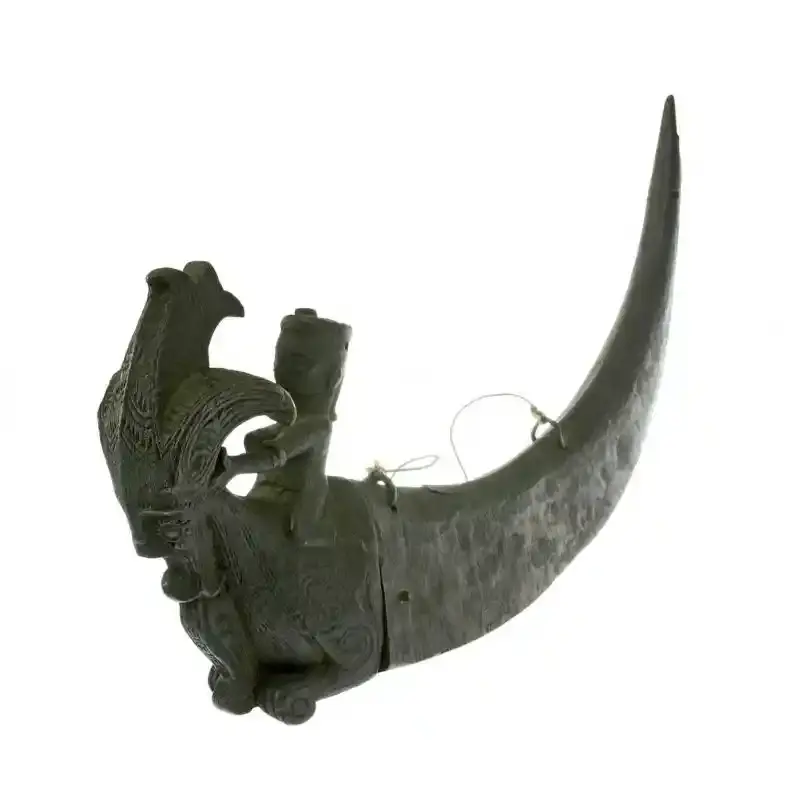
Naga morsarang, also known as sahan, is a container used by the Batak people of northern Sumatra to store medicinal herbs and potions. A naga morsarang container is made from water buffalo horn.
Description
Naga morsarang is one of several types of containers in which shamans called datu kept potions believed to have supernatural powers. A large naga morsarang vessel can measure 52 centimeters in length and 26 centimeters in width. Naga morsarang vessels are decorated and incised with complex patterns. The pointed end of the horn is carved into the shape of a seated male figure, or sometimes multiple men are depicted. The mouth of the horn is covered with a wooden "cap". This wooden cap is always carved into a singa figure, a religious figure considered divine or semi-divine, half human and half divine. Besides the singa, other figures can be depicted riding the singa, such as the lizard Boraspati ni Tano and human figures. These human figures may represent datu shamans, the owner of the naga morsarang vessel, or former datu shamans and former owners of the vessel. Others believe these figures represent characters from Batak mythology.
A lizard figure, representing the earth deity Boraspati ni Tano, is sometimes carved inside the hollowed horn.
Potions
The Batak people believed that the spirits of the dead were able to influence the fate of the living. To gain the favor of the spirits, they performed elaborate rituals or sacrifices with the help of datu shamans, who were considered intermediaries between the human and supernatural worlds. Datu used magical books known as pustaha. The content of pustaha books could include methods for creating different types of potions used for both white and black magic. Naga morsarang were used as containers for these potions.
An example of a white magic potion is pagar, a potion used like an amulet to protect against evil. Creating pagar is very difficult and can be done only on certain auspicious days. Most of the ingredients of a pagar are derived from plants, although sometimes a chicken head, its entrails, and its feathers are included in the mixture. The ingredients for a pagar can be gathered only from certain sacred places known as sombaon. Creating a pagar can take days or weeks. All ingredients are then cooked and finely ground into a paste that is stored in a naga morsarang.
Similar containers
The Karo people's version of the Naga Morsarang container is known as perminaken/parminaken or guri-guri. Instead of water buffalo horn, the perminaken can also be made from other materials, for example bamboo, gourd, or even vessels from the Ming period imported from China. The perminaken similarly uses a wooden cap carved with a singa figure, and one person or several people depicted riding on the singa.
For the related guardian imagery, see singa in Toba Batak art, which distinguishes visible form, protective interpretation, and limits of object provenance.