Ritual healing in Indonesia has never belonged to a single method or a single religious framework. Across the archipelago, practices of cure, protection, purification, and bodily balance developed within local systems of belief, community authority, and inherited knowledge. For museums, this means that healing is not represented by one emblematic object. Instead, it appears through clusters of things: manuscripts, staffs, containers, textiles, offerings, and medicinal ingredients whose meaning emerged in use.
These objects should not be mistaken for accessories added to an already complete ceremony. In many cases they helped make the ceremony possible. They could authorize the specialist, hold substances believed to be efficacious, organize the timing of the rite, or create a protected relation between the afflicted person and the unseen powers addressed in the ritual. The best documented examples in museum collections come from the Batak peoples of North Sumatra, where ritual specialists known as datu used staffs, books, and containers as part of healing and divinatory work. Those examples do not stand for all of Indonesia, but they reveal with unusual clarity how healing and material culture were intertwined.
Objects as Instruments of Ritual Action
Healing objects in Indonesia were often effective because they joined matter to action. A carved horn, a bound manuscript, or a staff planted in the ground did not communicate meaning in the same way as a painting on a wall. It operated within an event. The object might be touched, opened, carried, anointed, or positioned in relation to the patient, the officiant, music, speech, or offerings. Its significance was therefore procedural as well as visual.
This is one reason museums need to be careful with the category of ritual object. The phrase can become too broad if it simply labels something as sacred or mysterious. A stronger interpretation asks what the object actually did within a healing sequence. Did it store ingredients, regulate divination, concentrate protective force, or identify the authority of the ritual specialist? Once that question is asked, healing objects become easier to understand as active tools within a social world of diagnosis, cure, and protection.
Manuscripts and the Authority of Knowledge
Among the best known Indonesian healing-related objects are Batak pustaha, bark books associated with the datu. The Metropolitan Museum notes that Batak ritual specialists were custodians of medicinal, scientific, and ritual knowledge, and that this knowledge was recorded in richly illustrated pustaha manuscripts. From a museum perspective, the importance of the pustaha lies not only in its writing system or unusual folded form. It also shows that healing could depend on preserved and specialized knowledge rather than on improvisation alone.
The manuscript therefore functioned as more than a container of words. It was part of a larger technology of authority. A datu who consulted a pustaha was not simply reading for private reflection. He was drawing on inherited systems of medicine, divination, and protective practice that connected text, image, and oral instruction. This makes the manuscript central to the history of healing ceremonies because it demonstrates that ritual efficacy was often understood as learned, transmitted, and materially grounded in specific objects.
Containers for Potent Substances
If manuscripts preserved knowledge, containers preserved substances. Batak collections at the Metropolitan Museum include naga morsarang, carved buffalo-horn vessels used by the datu to hold powerful mixtures and potions. The museum describes these horns as containers for supernaturally potent materials and notes the presence of figures such as the singa and the lizard form of Boraspati Ni Tano on related objects. Such details are important because they show that storage itself could be ritually charged. The vessel was not neutral packaging. Its shape and imagery contributed to its status.
Other Batak containers, including perminangken and related vessels, make the same point in a different material register. Some incorporated imported ceramics with locally carved stoppers, reminding us that ritual life could incorporate traded goods into indigenous systems of meaning. In a healing context, this matters because the ceremony depended not only on the recipe or substance but also on the disciplined handling of that substance. A carved horn, a sealed jar, or a decorated stopper established boundaries around what was powerful, dangerous, or curative.
Staffs, Movement, and Embodied Authority
Healing ceremonies were not organized by texts and containers alone. They also relied on objects carried by the body of the officiant. Batak ritual staffs known as tunggal panaluan are a strong example. The Metropolitan Museum explains that datu used these staffs in ceremonies involving trance, divination, curing, and other ritual tasks. The staff thus marked the specialist's role in a visibly public way. It was at once emblem, implement, and participant in the rite.
This embodied dimension is essential to understanding healing objects. A staff may appear static in a display case, but in ceremony it was moved, raised, planted, and animated through performance. The same is true of many objects associated with ritual care across Indonesia, where efficacy may depend on gesture, spoken formula, music, offerings, or the timing of action. Museums flatten this dynamic when they show only the carved surface. They become more informative when they explain that the object gained force through movement and use.
Between Specialized Ritual and Everyday Care
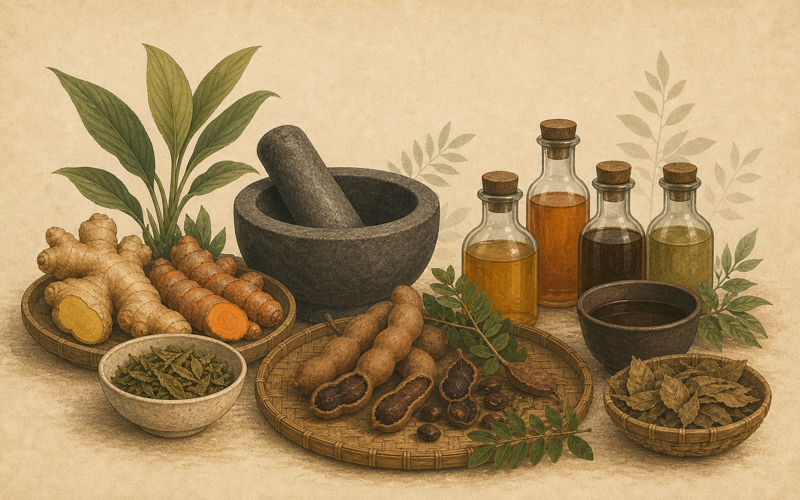
Not all Indonesian healing material culture belonged to highly esoteric specialists. UNESCO's inscription of jamu wellness culture offers an important counterpoint. Jamu is described there as a long-practiced Indonesian herbal tradition in which remedies are prepared from herbs and spices and transmitted largely through families and neighborhood networks. This evidence broadens the picture. It reminds us that healing objects may include humble tools of preparation and storage as well as more dramatic ritual implements.
For a museum, the contrast is productive rather than contradictory. On one side are specialized objects tied to named ritual experts, such as Batak manuscripts, staffs, and medicine horns. On the other are vessels, ingredients, and practices embedded in everyday care and household knowledge. Both belong to the cultural history of healing. Together they show that Indonesian approaches to well-being have often moved across a spectrum from domestic practice to ceremonially marked intervention, with material objects helping organize both.
Why These Objects Matter in Museums
Healing objects can easily be misread when separated from the systems that gave them meaning. A carved horn may seem ornamental, a manuscript merely textual, and a staff purely sculptural. Yet the museum record shows that such things once worked within networks of diagnosis, protection, ancestral mediation, and bodily care. Their significance lies less in isolated beauty than in the way they coordinated action, knowledge, and belief.
That is why this subject deserves careful interpretation. Museums do not need to repeat earlier exoticizing language in order to present ritual healing seriously. They can instead describe what is documented: who used the object, what sort of ceremony it entered, what substances or knowledge it carried, and how its imagery reinforced its function. When interpreted in that way, ritual objects used in Indonesian healing ceremonies become evidence of intellectual history as much as of visual culture.
Conclusion
Ritual objects used in Indonesian healing ceremonies reveal that cure was often approached as a material, social, and symbolic process at once. Manuscripts preserved specialist knowledge, containers held potent substances, and staffs gave embodied form to the authority of the ritual expert. Even where practices differed from region to region, the larger principle remained consistent: objects helped organize the relationship between illness, knowledge, and communal response.
Seen from a museum perspective, these objects are most meaningful when treated as parts of a working system rather than as isolated curiosities. They remind us that Indonesian healing traditions were carried not only in spoken formulas or remembered recipes, but also in crafted things designed to store, transmit, protect, and enact forms of care.