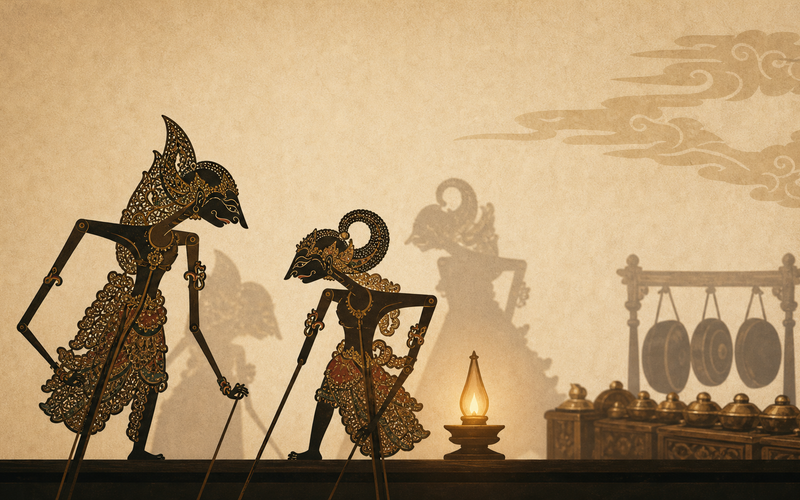
The Spiritual Meaning of Wayang Kulit in Javanese Society
Wayang Kulit, the traditional shadow puppet theatre of Java, is not merely a form of entertainment but a profound cultural and spiritual practice. This ancient art form, which dates back to at least the 11th century, serves as a medium for storytelling, moral instruction, and spiritual reflection. The performances are deeply rooted in Javanese culture and are often based on epic tales from the Ramayana and Mahabharata, as well as indigenous stories.
Historical Context
The origins of Wayang Kulit are intertwined with the spread of Hinduism and Buddhism in the Indonesian archipelago. As these religions took root, they brought with them epic narratives that were adapted into the local cultural context. Over time, Wayang Kulit evolved to incorporate Islamic influences, reflecting the dynamic religious landscape of Java.
Symbolism and Spirituality
In Javanese society, Wayang Kulit is more than a theatrical performance; it is a spiritual journey. The puppets, crafted from buffalo hide and intricately carved, represent various characters, each with symbolic meanings. The dalang, or puppeteer, is a revered figure who not only manipulates the puppets but also serves as a spiritual guide, interpreting the stories' moral and philosophical lessons.
The performances are often held during significant cultural and religious events, such as weddings, harvest festivals, and rites of passage. They are believed to bring blessings and balance to the community, serving as a conduit between the physical and spiritual worlds.
Cultural Significance
Wayang Kulit plays a crucial role in preserving Javanese cultural identity. It is a living tradition that has adapted to modern times while maintaining its core spiritual and cultural values. The performances are a testament to the resilience of Javanese culture, offering insights into the community's worldview and ethical principles.
In conclusion, Wayang Kulit is a vital aspect of Javanese society, embodying the island's rich cultural heritage and spiritual depth. Its continued practice and evolution highlight the enduring significance of traditional arts in contemporary Indonesia.